
 Itineraries
7 Day Rajasthan Itinerary
Jaipur, Pushkar, Jodhpur and Udaipur in one stress-free week — the route we book more than any other.
Read guideThe ghats, the one-street bazaar, the evening aarti and the November camel fair — everything you need to know before you go.
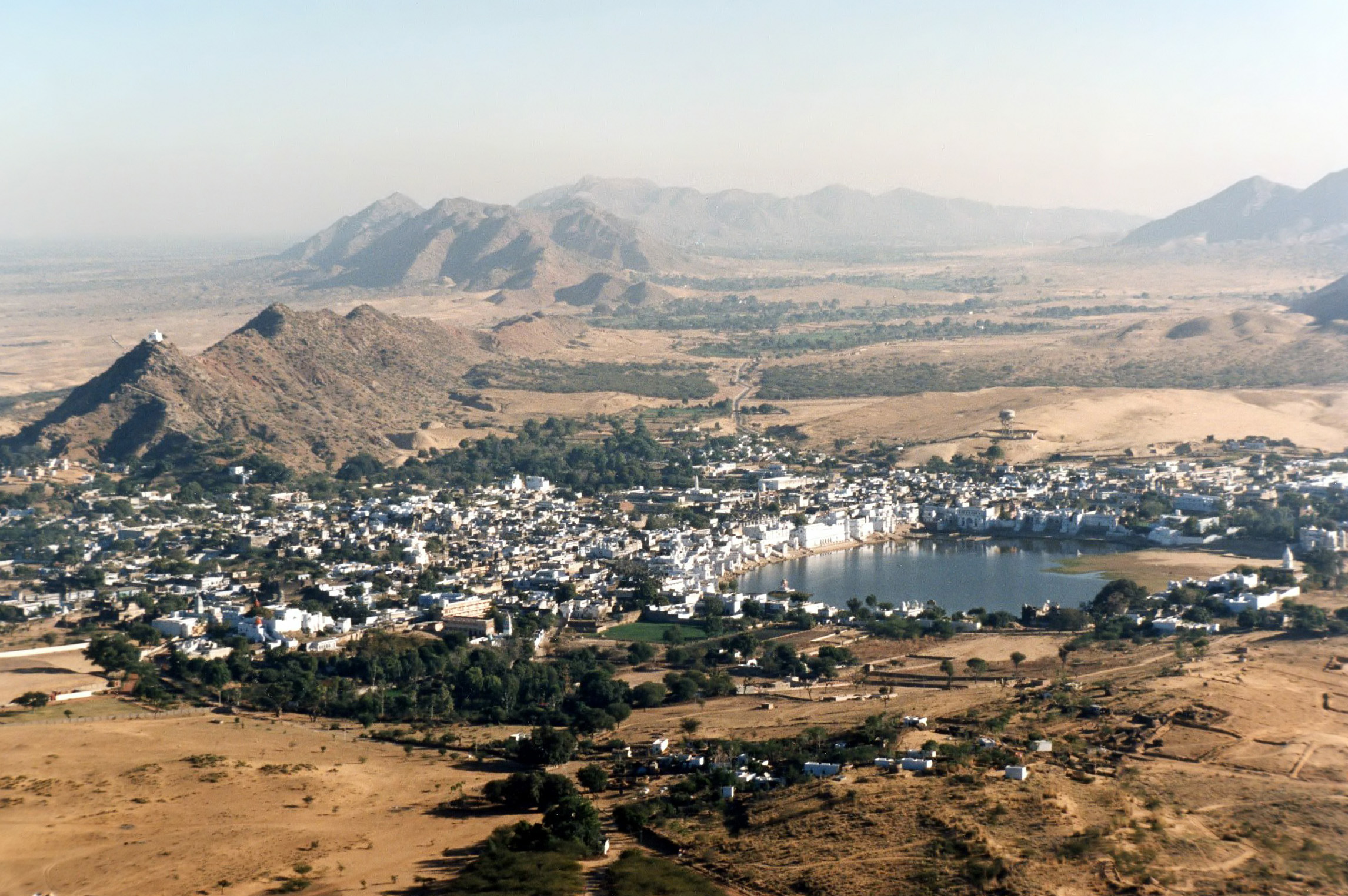
Every Rajasthan itinerary has a stop that surprises people the most, and for us it is almost always Pushkar. It is small — you can walk across the town in fifteen minutes — yet it holds one of India's holiest lakes, the only Brahma temple on earth, and one of the world's most photographed camel fairs. As a Rajasthan travel company we stitch it into more routes than any other short stop, because it delivers atmosphere that the big cities simply cannot.
This guide covers the essentials without the fluff: what makes Pushkar different, the handful of things actually worth your time, when the camel fair happens and how to see it comfortably, and the honest answer to how long to stay. If you are still planning the whole trip, our 7-day Rajasthan itinerary shows exactly where Pushkar sits inside the classic loop.
Pushkar is the town Rajasthan's other destinations pretend to be after sunset. Around the Brahma-created Pushkar Lake, the entire settlement is lacto-vegetarian — meat and eggs are off the menu — and alcohol is banned across the town. The result is a place that stays calm: no loud late-night bars, no glaring signs, just temple bells, the murmur of the ghats and a bazaar that shuts down early.
Add a single main street — the only real bazaar street, lined with cafés, silver shops and kaftan stalls — and Pushkar becomes wonderfully walkable. Most travellers who arrive thinking it is a half-day curiosity end up slowing right down. It is also a natural fit for a Rajasthan Grand Tour, where it works as either a start point after Ajmer or a gentle stop before the blue city.
No alcohol, no meat, one holy lake — Pushkar is where Rajasthan finally slows down to your pace.
The heart of Pushkar is the lake, ringed by 52 ghats where pilgrims bathe at dawn. Walk the full circuit slowly — the stairways, the painted temples and the white shrine towers make it the most photogenic stretch in the town. As evening falls, the aarti ceremony at the main ghat draws a crowd of locals and travellers alike; arrive early, find a step above the crowd, and just watch.
_Camel_Pushkar_fair.jpg)
Above the lake sits the Brahma Temple — one of very few in the world, with its distinctive red spire. The approach is a steep climb past vendors, and the inner sanctum is small, but the sheer rarity of a Brahma shrine makes it the town's must-see landmark. Everything else worthwhile — silver jewellery in the market, rooftop cafés for a lake-view lunch — folds into the same one-street walk. A driver plus a short stroll is all you need, which is exactly how our Jaipur Ajmer Pushkar tour approaches it.
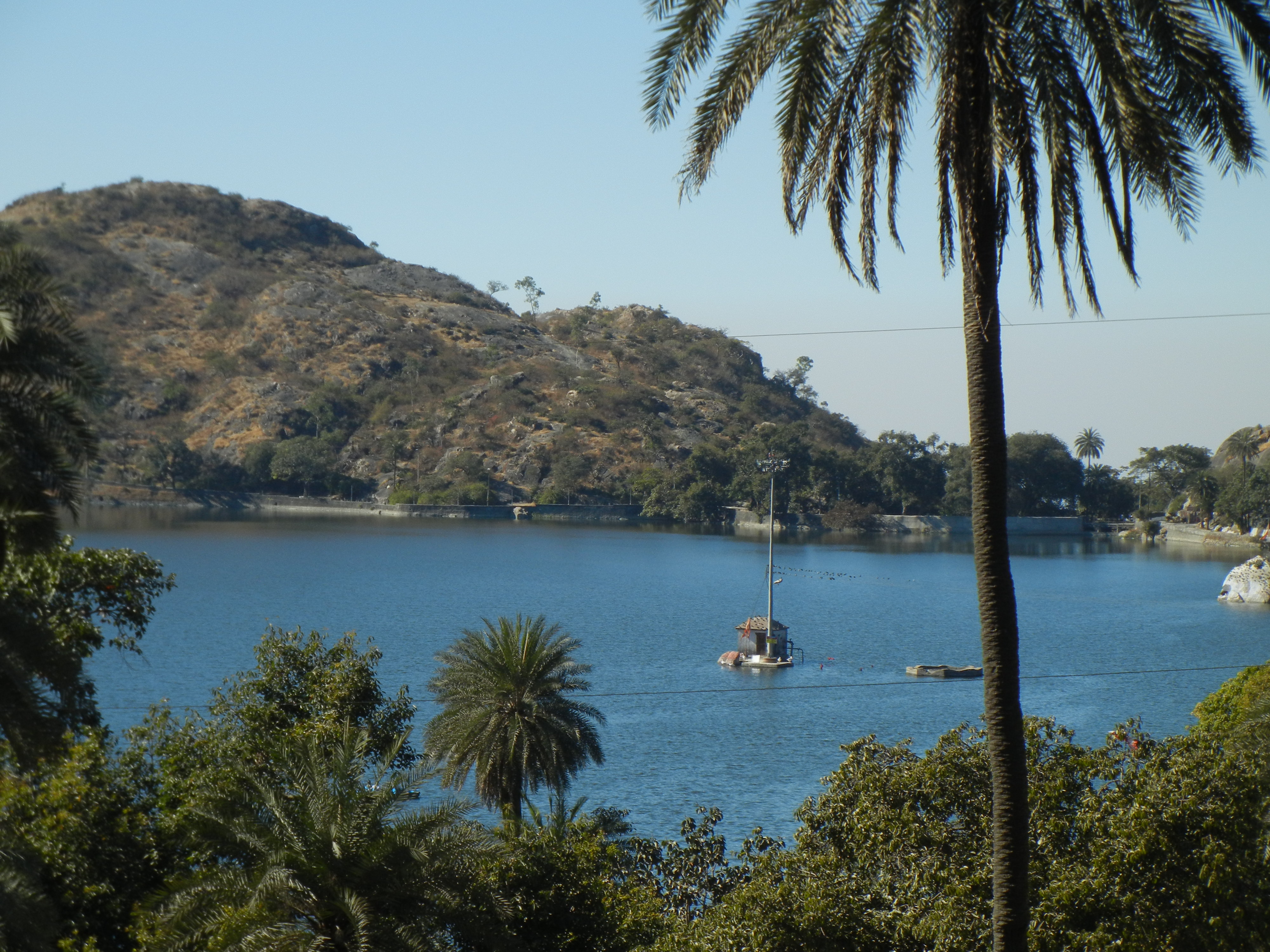
The lake, the aarti, the Brahma Temple and a guided walk of the bazaar — a complete Pushkar day with private cab and hotel.
View this packageEach November, Pushkar hosts the Pushkar Camel Fair — a week-long festival that is half trading market, half carnival. Hundreds of thousands of people, and up to tens of thousands of camels, gather on the dunes outside town. Dealers parade their camels decorated in beads; there are moustache competitions, folk performances, hot-air balloons and bazaars spanning kilometres.
Dates follow the full moon of the Hindu month Kartik Purnima, so they drift every year — expect anything from late October to mid-November. If you want to see it, book accommodation months ahead: the town of a few thousand swells to a city of hundreds of thousands. The fair also needs more time than a pass-through visit — treat it as its own trip and pair it with a longer route like the Rajasthan tour from Delhi that reaches Ajmer and Pushkar on the right dates.
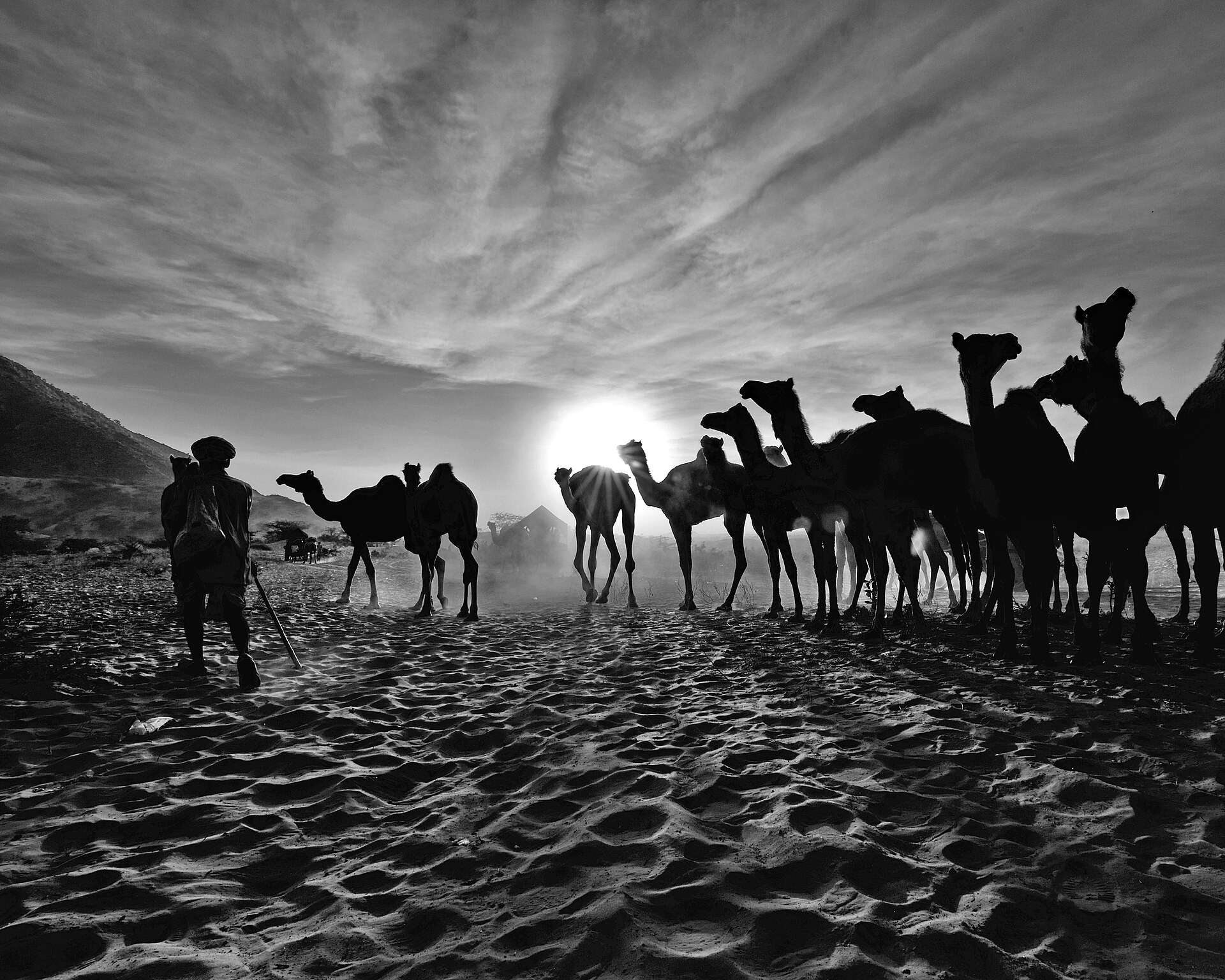
The best way to see it is early mornings and at sunset, when the camel lines and the golden light are at their most dramatic and the crowds are thinnest. Amateur photographers can wander the fairground freely; professional shoots may need a permit and often a small payment to a camel owner. Most visitors watch the events from the arena the fair organisers set up alongside the camps, then ride or walk back as balloons rise at dawn. Go without a fixed plan — the fair rewards drifting far more than following a schedule.
Outside fair week, the same archaeological site at Ajmer — including the Shrinathji tradition at Nathdwara, for devotees continuing the temple trail — shows how deep Rajasthan's religious tourism runs alongside Pushkar's bohemian streak.
Pushkar's genius is that it sits neatly on the main west-bound road. It is a three-hour drive from Jaipur and another three hours to Jodhpur, which makes it the perfect overnight on the classic Jaipur Jodhpur Udaipur tour. Arrive by late afternoon, catch golden hour on the ghats, the aarti after dark, and a slow bazaar morning before driving on.
One night is right for most people. If you have a whole extra day, the lakeside and the Brahma mausoleums reward a second evening. For a shorter taste, the Pushkar Ajmer day tour combines both towns, and the pillars of Pushkar slot straight into our 7-day plan — or ask us online and a trip designer will fit it to your dates. Our Jaipur Ajmer Pushkar loop is the version we book most often.
Start your lake walk before breakfast or after 4 pm; the midday sun is intense, especially on the pale stone ghats. Wear clothes that cover shoulders and knees, remove shoes where a ghat or temple asks, and keep your voice low during prayers. Pushkar's cafés are used to international visitors, but the town is still a pilgrimage centre rather than a party resort. Carry small notes for temple donations, refill a water bottle instead of buying several plastic ones, and let your driver drop you at the edge of the bazaar — the central lanes are easiest and most enjoyable on foot.
The holy lake, the Adhai Din Ka Jhonpra and the Ajmer Sharif Dargah in one relaxed day from Jaipur — a perfect add-on when you have a spare day.
View this package
Itineraries
Jaipur, Pushkar, Jodhpur and Udaipur in one stress-free week — the route we book more than any other.
Read guide_-_img_01.jpg) City guides
City guides
The Pink City's forts, palaces and bazaars — the three-day plan locals would give a visiting friend.
Read guide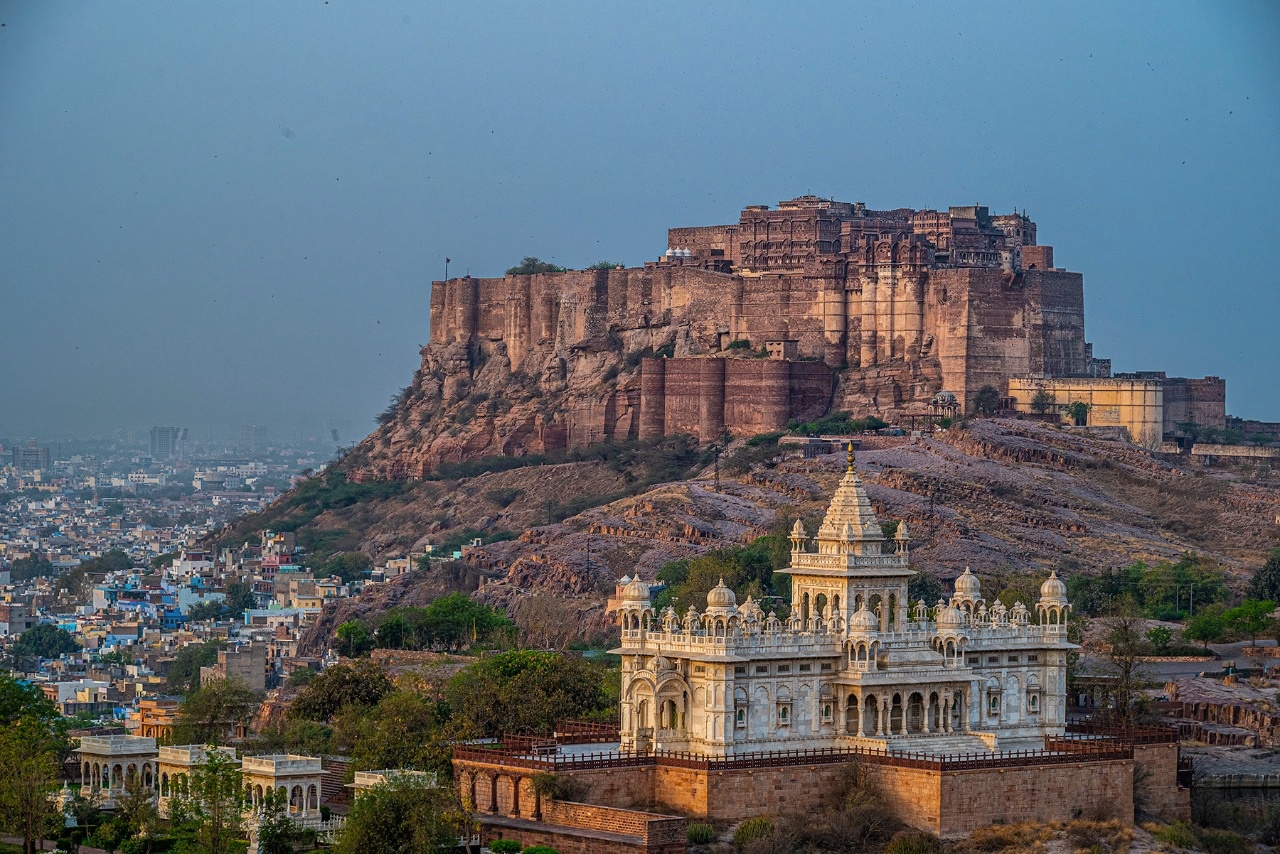 City guides
The Blue City, Mehrangarh Fort and the Old Town streets — how to spend two perfect days below the ramparts.
Read guide